In this story
Ninety minutes, give or takeThe rules nobody wrote downSide A, Side BThe sound of a pauseWhat the playlist can't doThere is a particular kind of silence that comes just before the record button clicks down. The room holds its breath. Somewhere nearby a stack of albums waits to be raided, and a pencil lies ready to rewrite the track list for the third time.
The mixtape was never really about the music. It was about the sequence — the argument a person could make using other people's songs, one after another, until the sentence they couldn't say out loud finally got said.
01Ninety minutes, give or take
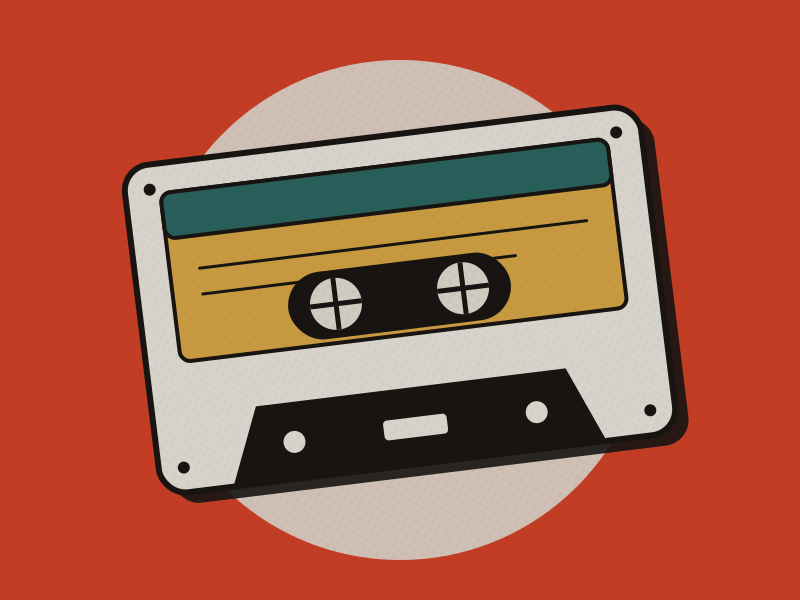
The Compact Cassette was introduced by Philips in 1963 as a convenient, pocketable format, first aimed at dictation and portable recording. It took years for it to become something else entirely: a small, cheap, rewritable object that anyone could fill with whatever they loved. When Sony's Walkman arrived in 1979, the tape had already become the natural container for a private soundtrack.
A ninety-minute tape gave you forty-five minutes a side, and that limit was the whole genre. It forced decisions. You could not include everything, so you had to decide what the tape was for — a drive, a breakup, a birthday, an apology — and then let everything that didn't serve it go.
That arithmetic, more than any particular song, is what people tend to remember. You counted minutes. You looked at the clock on the dashboard and did sums. You discovered that the song you were saving for last was four seconds too long, and you had to choose between the ending and the fade.
02The rules nobody wrote down
Nobody handed out a manual, yet most tape-makers seemed to follow something like a shared etiquette. If we had to write it down today, it might look a little like this:
- Open with a hello, not a goodbye. The first song sets the weather.
- Never put two slow songs next to each other before the halfway point.
- Include one song the listener already loves, and one they've never heard.
- Leave room at the end of each side for a final, quieter track.
- Write the track list by hand. The handwriting is part of the gift.
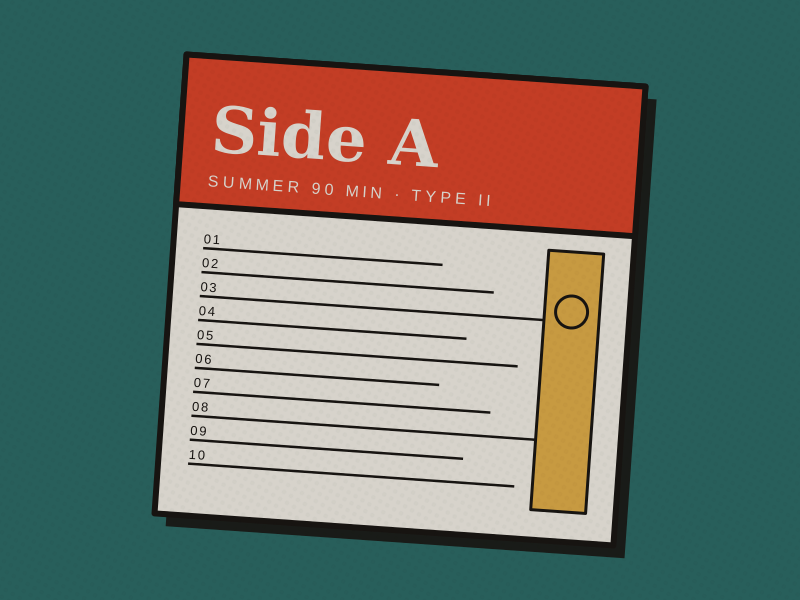
03Side A, Side B
Flipping the tape was an intermission built into the object. It gave the maker a second chance at an opening, and it gave the listener a moment to get up, stretch, and wonder what was coming next.
Good tapes treated the two sides as different moods. Side A was the public face: bright, welcoming, a little showy. Side B was where the real confessions went — the slower songs, the stranger choices, the track that made no sense until you'd heard everything before it.
A good tape has a spine: an opening that welcomes you, a middle that surprises you, and a last song that lets you go.— Editors' note
You can hear the same instinct in a well-made album or a thoughtful radio hour. The difference is that the mixtape was addressed to exactly one person, and it knew who they were.
04The sound of a pause
Then there were the imperfections. Recording from the radio meant a host talking over the intro. Recording from another tape meant a faint, gentle hiss that grew with every generation. The pause button, pressed a fraction too early or too late, left a tiny gap or a clipped first note.
These flaws were not failures; they were fingerprints. A tape made for you sounded like it was made for you, down to the half-second where someone's thumb slipped.
“I still have one tape where the first four seconds of every song are missing. I would not trade it for any playlist.”
05What the playlist can't do
None of this is an argument against playlists. A playlist is faster, cleaner, and infinitely more generous: no minute limit, no hiss, no clipped intros. It can hold a thousand songs and fit in a pocket you already own.
But it removes the constraint that made the tape a message. When everything fits, nothing has to be chosen. When nothing has to be chosen, the choosing stops being a gesture.
So make one this week, if you can find a deck, or if you can't, borrow the rules. Pick a number of minutes. Pick one person. Pick the song you'd put last, and work backwards from there.
End of story
Prototype note: this article is demonstration copy written for a design review. Quoted reader text is a clearly marked placeholder, and all illustrations are original.